Seven Types of Catastrophic Injuries Explained
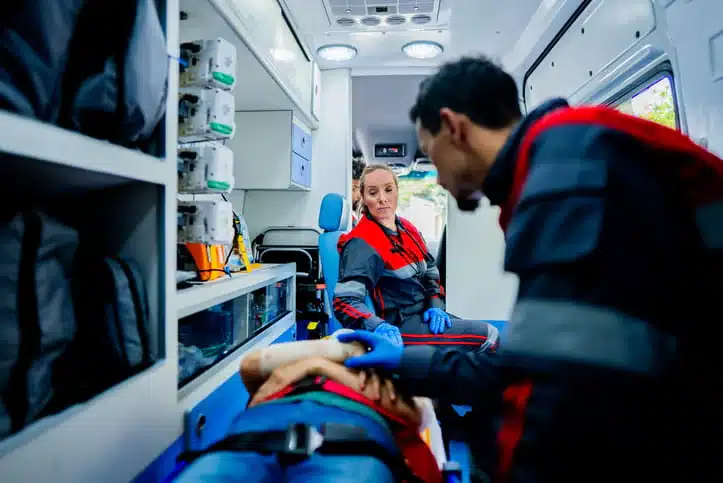
Sustaining a catastrophic injury in an accident can significantly affect your life. But what qualifies as a catastrophic injury?
Under personal injury law, a catastrophic injury is a severe injury that causes permanent or long-term physical, cognitive, or emotional disability. Unlike other injuries that heal, a catastrophic injury typically has life-altering effects.
Any form of negligence can result in a catastrophic injury, including motor vehicle accidents, medical malpractice, premises liability, product liability, fires/explosions, workplace accidents, and acts of violence.
Kyle Bachus helps injured victims understand their options and the financial costs of catastrophic injuries.
What Are the Seven Types of Catastrophic Injuries?
The common catastrophic injury examples include the following:
Traumatic Brain Injuries
A traumatic brain injury (TBI) is a disruption in the normal function of the brain that happens when a strong external force hits the head or body, causing the brain to move, bounce, or twist violently inside the skull. Or when an object pierces the skull and enters the brain tissue.
This can be from a car collision, workplace or construction accident, medical malpractice, sports impact, or an act of violence.
A TBI can cause short- or long-term effects, depending on the severity and location of the injury. This includes headaches, balance issues, memory loss, behavioral/personality shifts, and reduced capacity to work or maintain daily tasks.
Learn more about traumatic brain injuries and their effects.
Spinal Cord Injuries
A spinal cord injury (SCI) is damage to the spinal cord or the surrounding vertebrae, nerves, ligaments, or discs that disrupts communication between the brain and the rest of the body.
This usually results in partial or complete paralysis since the damage interrupts the messages that tell muscles when to move. It also interrupts feedback from the body (the sensory nerves) back to the brain and involuntary internal communications, such as blood pressure regulation, heart rate, and bowel or bladder control.
An SCI can result from a car crash, a fall, an act of violence, or a medical error. Besides immediate and ongoing treatment, an injured victim may need physical therapy, a wheelchair, home and vehicle modifications, and daily assistance with tasks.
Severe Burn Injuries
Severe burn injuries can cause deep tissue damage, permanent disfigurement, loss of bodily function, or long-term disability. The psychological effects of catastrophic injuries are also commonly reported among victims who sustain burn injuries.
A severe burn injury can be caused by fires, corrosive/toxic substances, exposed/faulty wiring, and medical radiation overexposure. It also frequently occurs during motor vehicle collisions and workplace/industrial explosions.
Amputations and Loss of Limb Function
An amputation can be traumatic, which means it occurs immediately during a motor vehicle or industrial accident. Or it can happen surgically afterward when a limb is damaged beyond repair or poses a life-threatening risk.
Losing an arm, leg, hand, or foot partially or completely can substantially impact one’s independence and quality of life. An injured victim may deal with permanent disability after an injury.
Such an injury may also require lifelong medical care, physical therapy, occupational therapy, prosthetics, home or vehicle modifications, psychological support, and in-home assistance.
Severe Internal Organ Damage
Blunt or penetrating forces, toxic/chemical exposure, and medical malpractice (surgical/anesthesia/diagnostic/medication errors) can cause life-threatening or deep-tissue trauma to internal organs, resulting in permanent or long-term effects.
An injured victim may experience permanent loss of function of an organ, chronic illness, shortened life expectancy, and psychological trauma. This can bring about immediate and repeated medical care, long-term interventions, like dialysis for kidney failure or an organ transplant, as well as continuous monitoring, restrictions on activity, and caregiver services.
In some cases, severe internal organ damage can even lead to death.
The book Unthinkable by Kyle Bachus helps families who have suffered a loss caused by someone else’s negligence. Learn more today.
Vision or Hearing Loss
The loss of vision can occur when a high-impact blow that causes a TBI damages the optic nerve, when one is exposed to toxic chemicals, or due to medical malpractice. Hearing loss can be caused by skull fractures, an auto accident that damages the eardrum, and medication/surgical errors.
Vision or hearing loss leads to difficulty communicating, loss of independence, and psychological trauma. An injured victim may also need specialized medical care, assistive technology, rehabilitation and training, and home and vehicle modifications.
Multiple Fractures
A multiple complex fracture from a motor vehicle accident, fall, or crush accident can lead to severe physical, surgical, or neurological complications that interfere with normal healing. This can cause permanent disability, chronic pain, limited mobility, and secondary complications, like nerve damage, post-traumatic osteoarthritis, and complex regional pain syndrome (CRPS).
Consequently, an injured victim may require ongoing treatment, home and vehicle modifications, in-home nursing care, and long-term pain management. They may also have difficulty returning to work due to an inability to sit/stand for long periods.
How Can Catastrophic Injuries Affect a Person’s Ability To Work and Live Independently?
Catastrophic injuries usually cause permanent or long-lasting physical, cognitive, and emotional damage that can affect a person’s ability to work and live independently. An injured victim may need to rely on daily caregivers, shift careers, or reduce working hours. Some may not even return to employment due to physical and cognitive limits.
How Can a Catastrophic Injury Lawyer Help Victims Pursue Compensation for Their Injuries and Long-Term Care Needs?
If you are wondering when to hire a catastrophic injury lawyer, you need to do so immediately after learning that an injury may be permanent or life-altering.
Attorneys help injured victims gather crucial evidence, collect witness statements, deal with insurance companies, and get expert witnesses in catastrophic injury claims to pursue fair compensation.
When a fair settlement can’t be reached, your lawyer can take your case to court. You can also learn more about how long a catastrophic injury lawsuit takes.
If you or your loved one sustained a catastrophic injury, it’s critical to get the compensation you deserve. Contact us today to protect your rights.